CELINA
- Role
- Concept, light studies, CAD and prototype
- Team
- Henning Gunnarsson, Tilde Albrektsson, Filip Johansson
- Year
- Feb–May 2026
- Tools
- Fusion 360, Blender, Photoshop
- Type
- Bachelor thesis, Linköping University · Client: Reijmyre Glasbruk
- Light
- GX53 LED, 2700 K, 500 lm
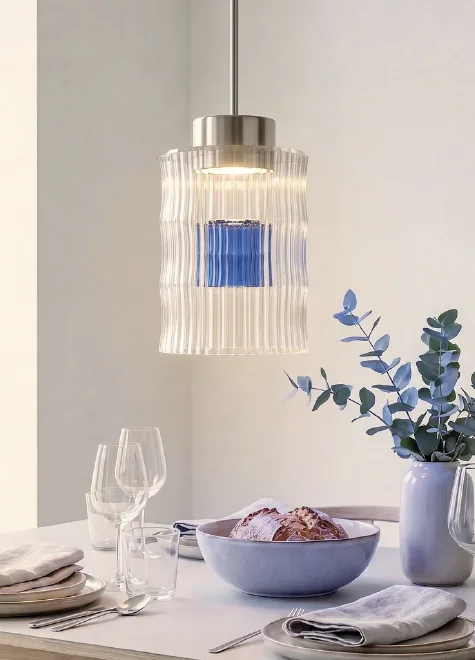
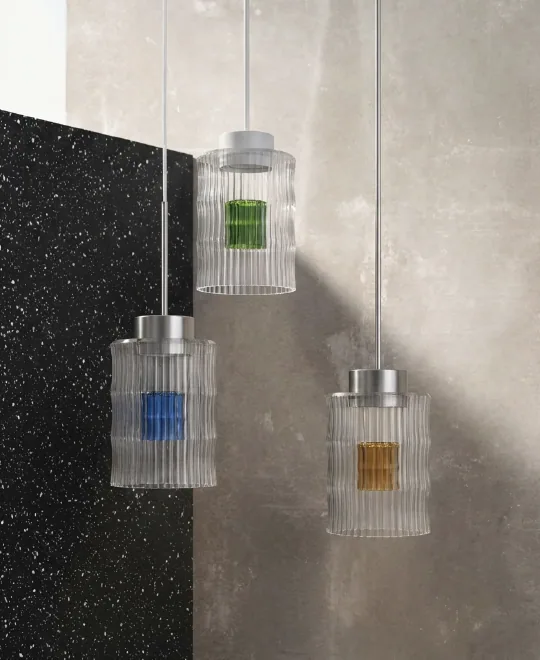
Celina is a pendant lamp where a small coloured LINA vase floats inside a large clear one. The light source is hidden, so all you see is the glass and its colour.
The process
- 01UnderstandThe brief from Reijmyre, and a light lab to learn how light behaves in their glass.The brief · Understanding light
- 02IdeateFifteen ways to turn Reijmyre's LINA and EBBA vases into lamps.Fifteen ideas
- 03DevelopA small coloured vase floating inside a large clear one, and its place in a family of three.A floating vase · One of three
- 04BuildParts modelled in Fusion 360, CNC-turned in aluminium and assembled.Prototype
- 05DeliverShown at an exhibition at Linköping University.Outcome
- 06ReflectWhat was hard about working with glass and light.Looking back
The brief
Reijmyre Glasbruk asked how their existing glass could be combined with standard, off-the-shelf components into lamps that work technically and can be reproduced. It is also a way to use vases with small air bubbles, which can't be sold as art glass.
Seven of us took on the brief for our bachelor thesis; Celina was developed by Tilde Albrektsson, Filip Johansson and me. We worked from Thomas Sandell's LINA and EBBA collections, and chose LINA for its simplicity and clean lines.


Understanding light
Before designing anything, we built a light lab at the university to test colour temperature, brightness, bulb types and how light behaves in different glass.
Two findings shaped Celina. Clear glass gives no protection against glare, so the light source has to be hidden. And hand-blown glass varies in thickness, so the construction has to be based on the measurements that stay constant, such as the outer diameter.
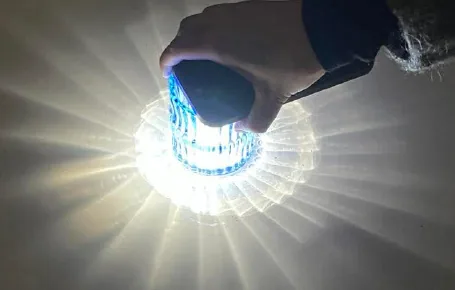
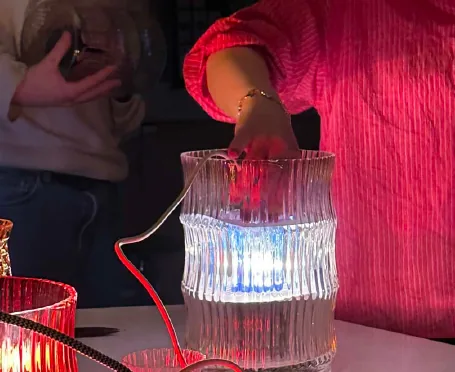
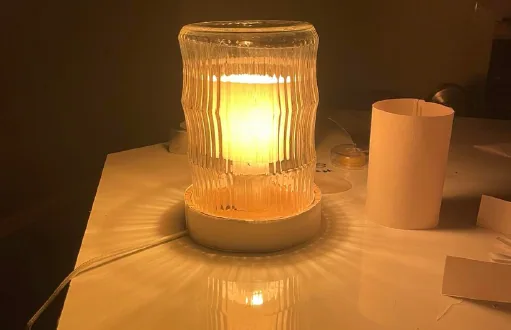
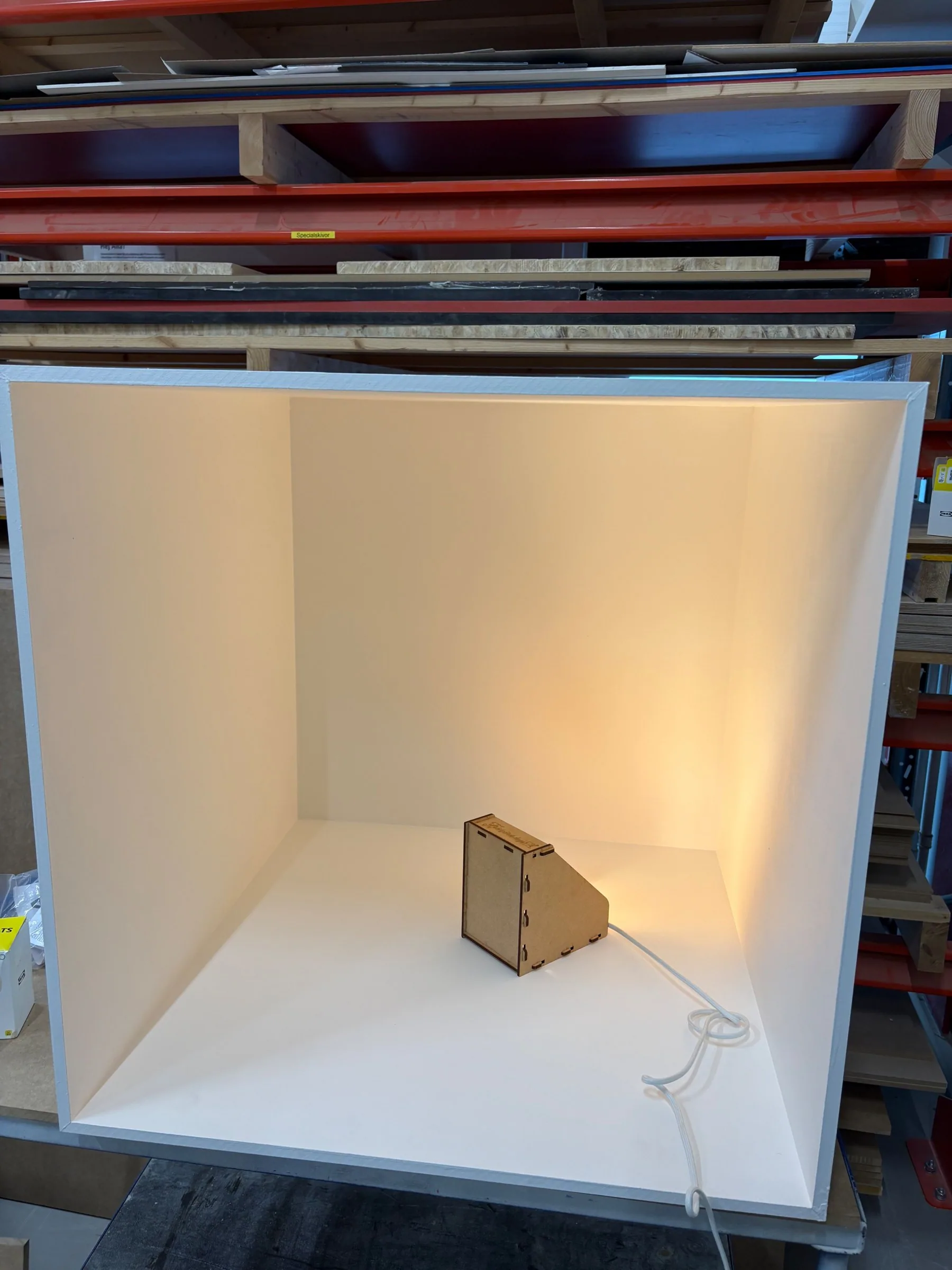


We worked from lighting designer Richard Kelly's three principles of light. The team developed one lamp for each.
Ambient luminescence
The soft, even base light that fills a room.
Celina
Focal glow
Directed light that draws the eye to a surface or object.
Nikolina
Play of brilliants
Sparkle and reflections that bring a space to life.
Paulina
Fifteen ideas
We sketched fifteen ways to build lamps from LINA and EBBA glass: pendants, table, floor, wall and serving lamps.
Celina grew out of No. 1 and No. 3, two pendants that both combine a large and a small LINA vase.
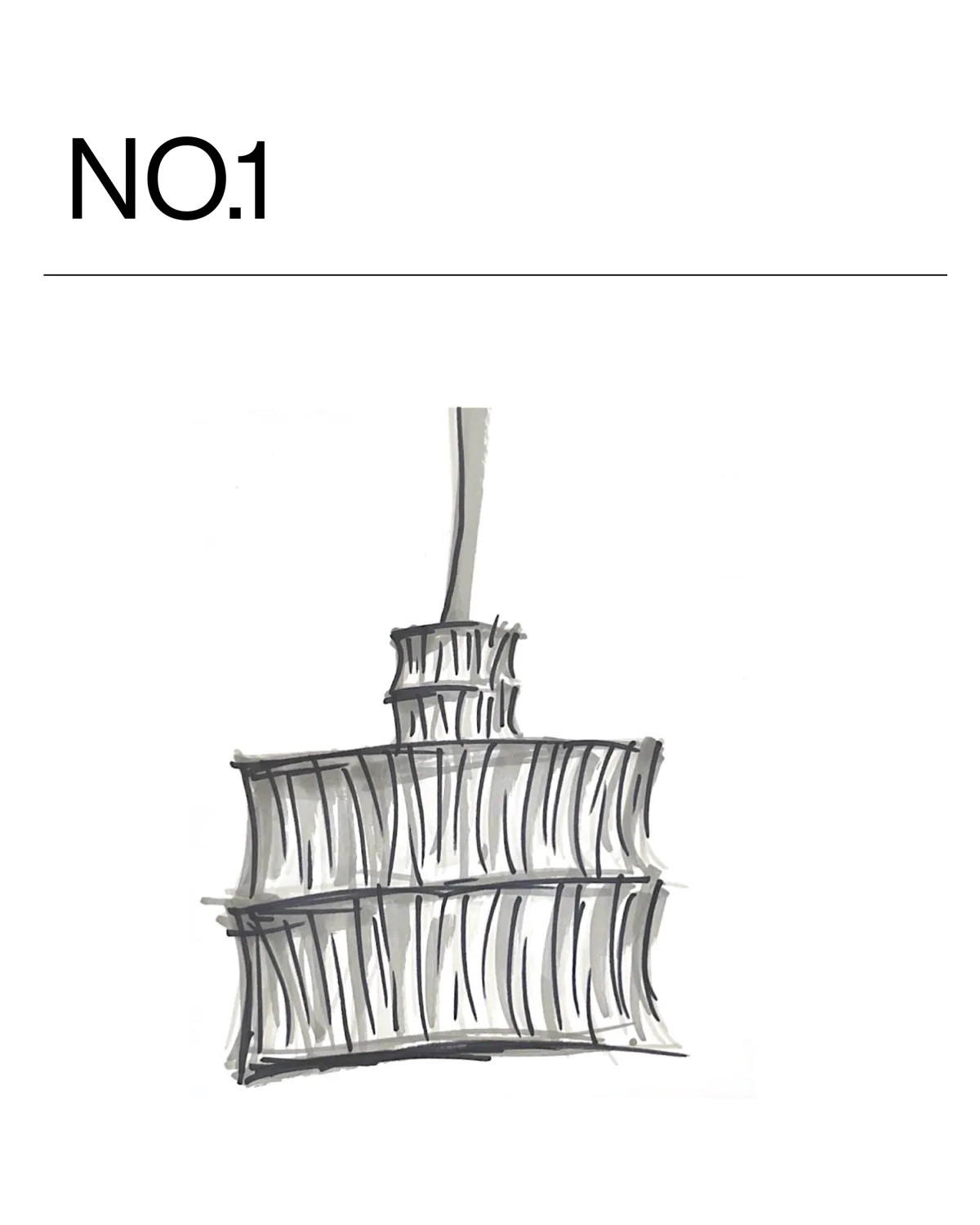
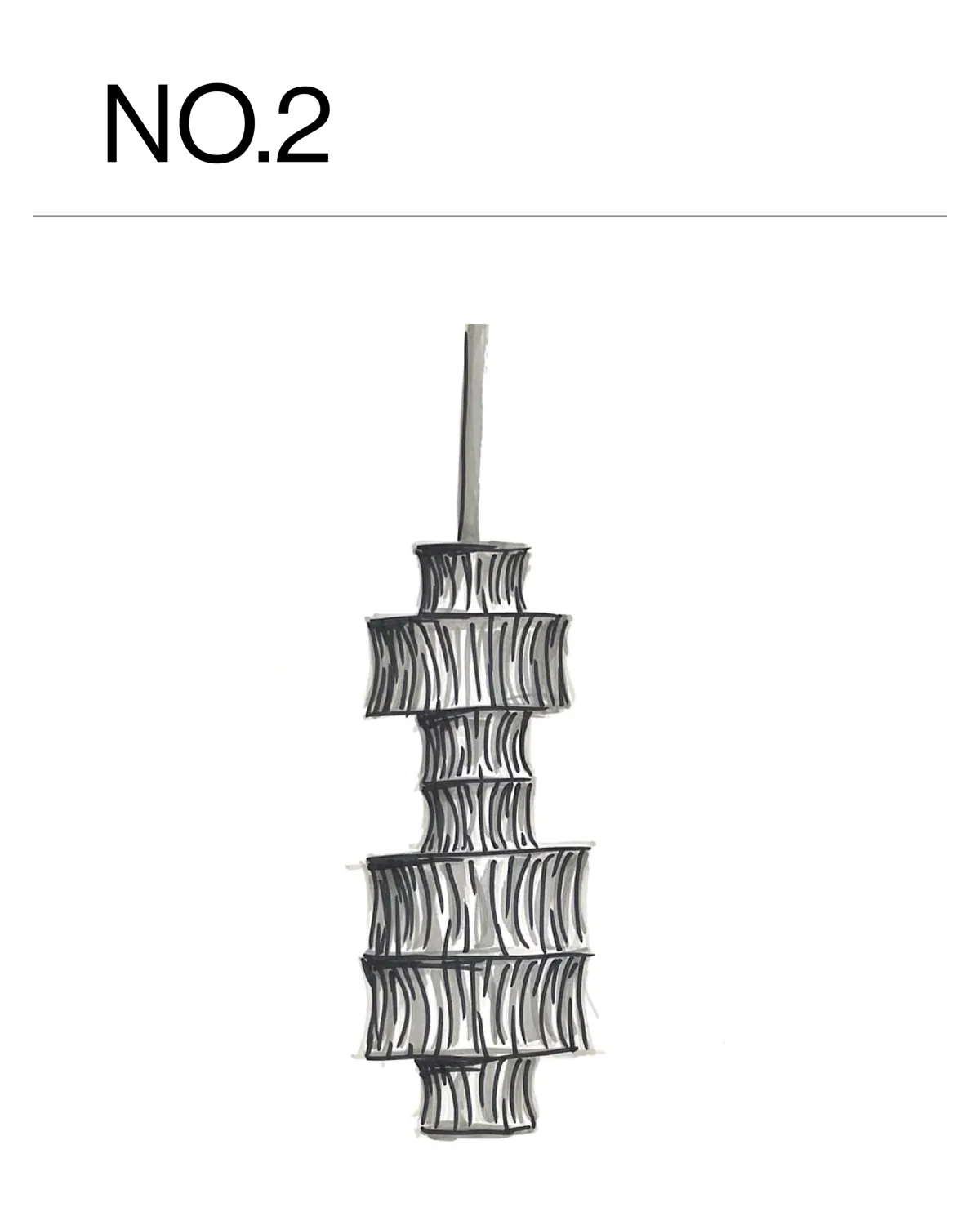


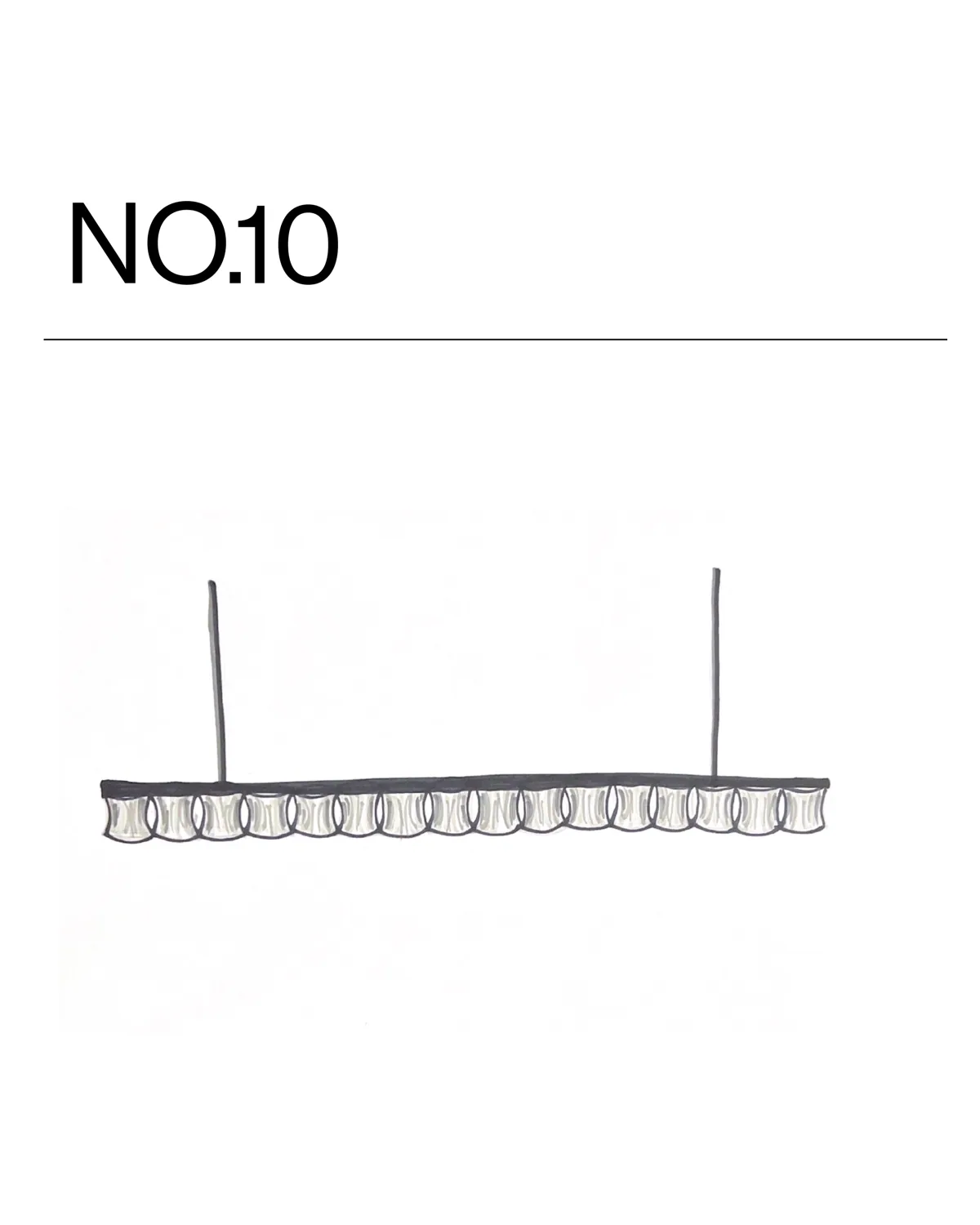

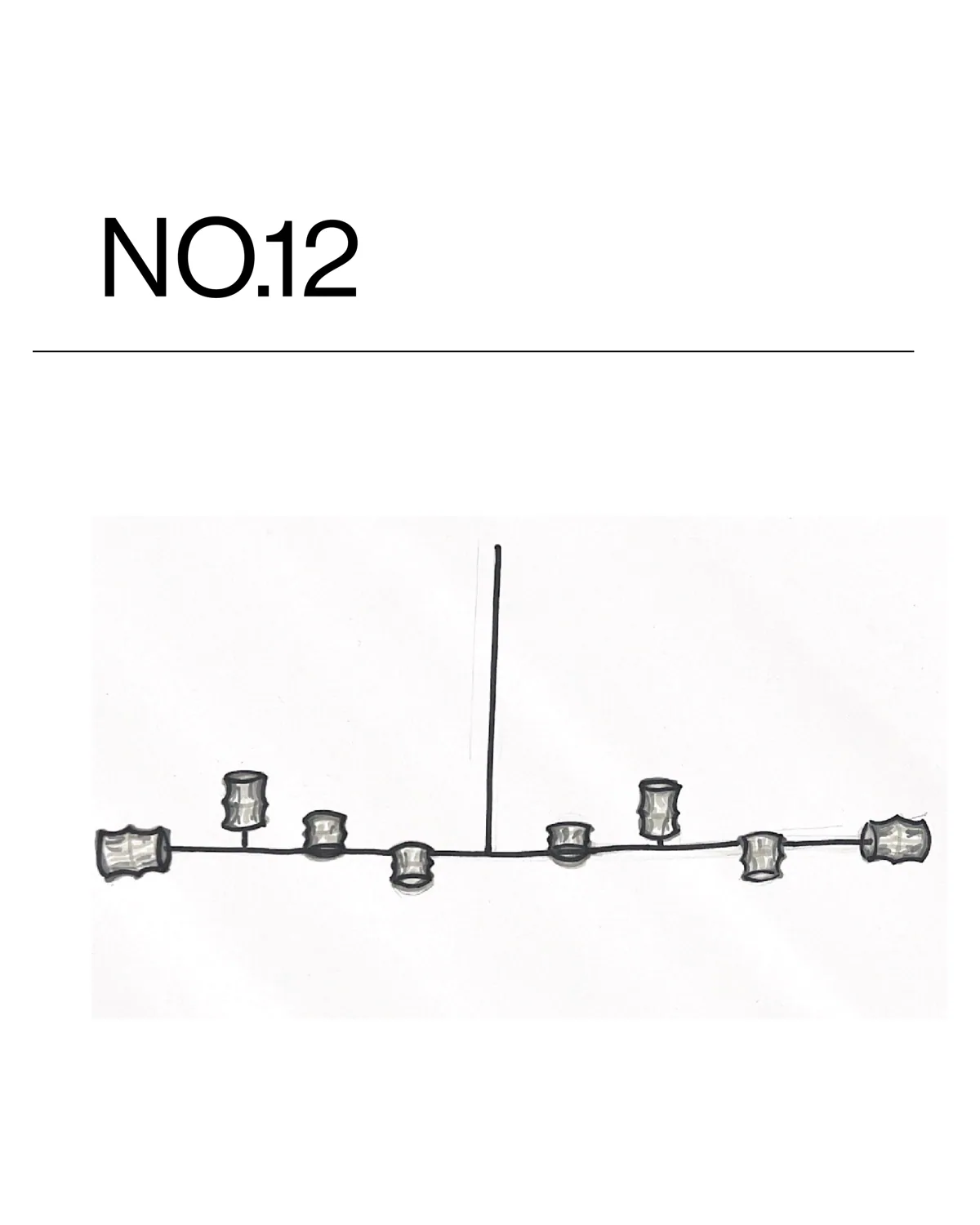


We took the strongest ideas further. Alongside the main family that became Celina, Nikolina and Paulina, we also developed an alternative family of four lamps, each tied to one of Kelly's principles.


A floating vase
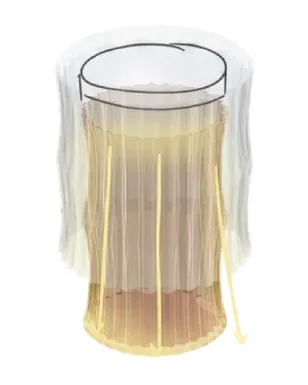
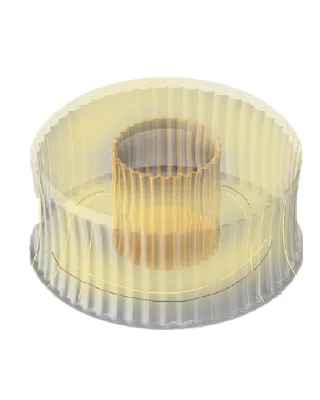
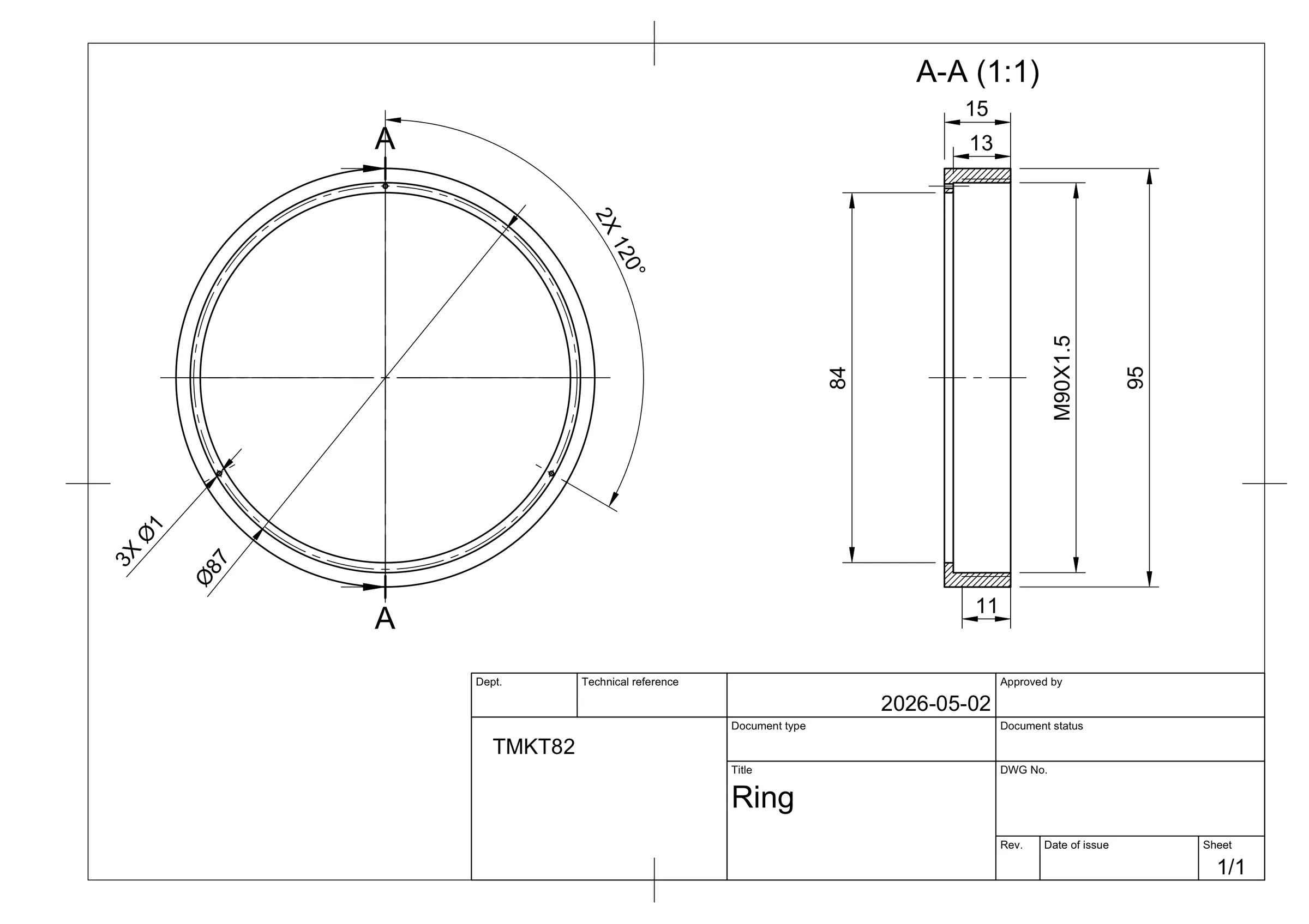
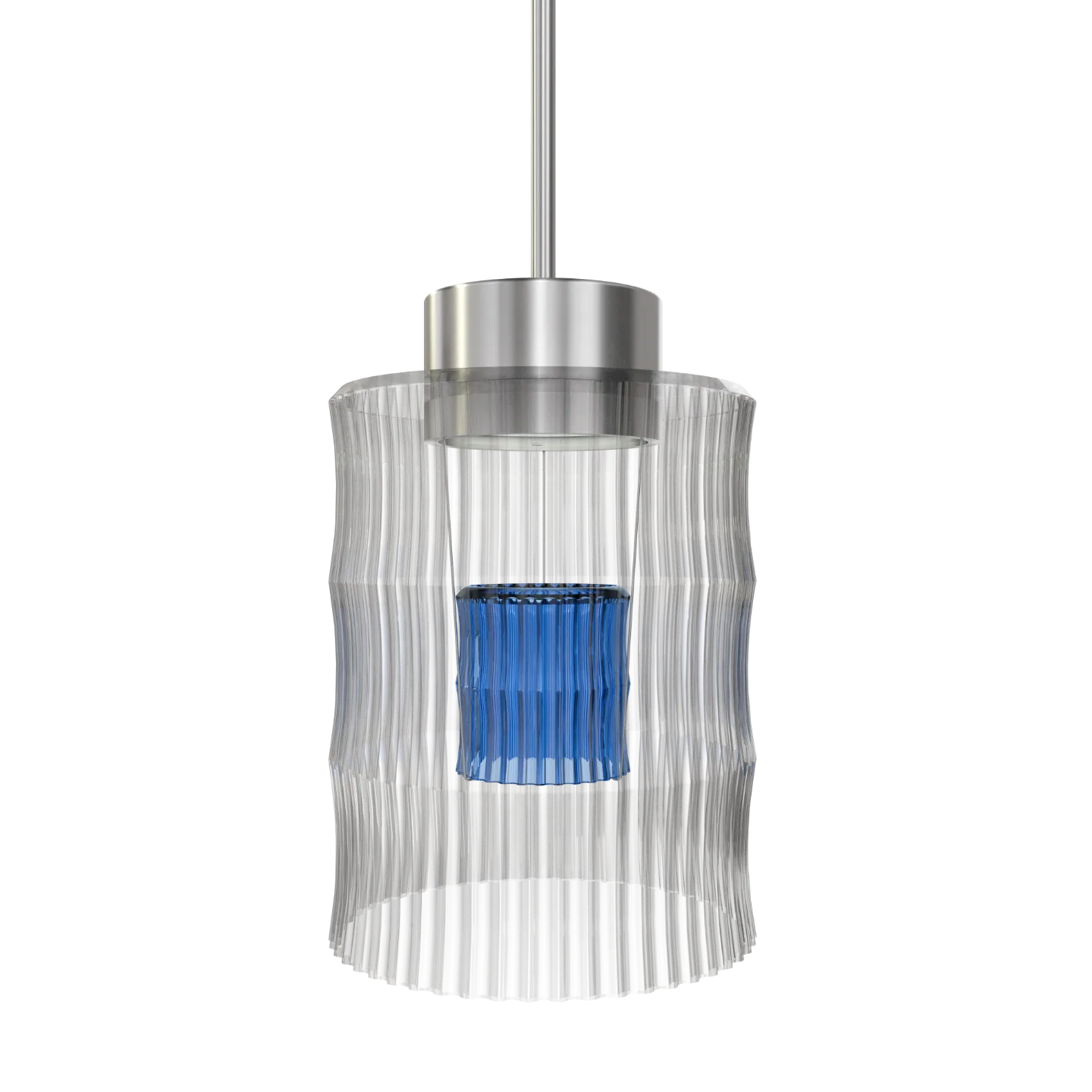
A small coloured LINA vase floats inside a large clear one, hung from three 1 mm wires tensioned in a lock ring. The top of the small vase is cracked off so it sends an even light straight down, and its distance to the light source is tuned to balance soft ambient light with direct light over the table.
Celina is meant to work with second-sort vases too, so a 300 mm gravity pipe makes the lamp hang straight whatever the glass is like. A bent steel bracket with built-in strain relief carries the whole lamp, which keeps the ceiling cup small.
Parts, top to bottom
- Gravity pipe, 300 mm
- Top cap
- Mounting bracket
- GX53 light source
- Diffuser
- Large LINA vase
- Lock ring
- Small LINA vase, top cracked off
- Three 1 mm wires



One of three
Celina is one of three lamps in the project's main family, alongside Nikolina and Paulina, which were developed by the other students in the project.
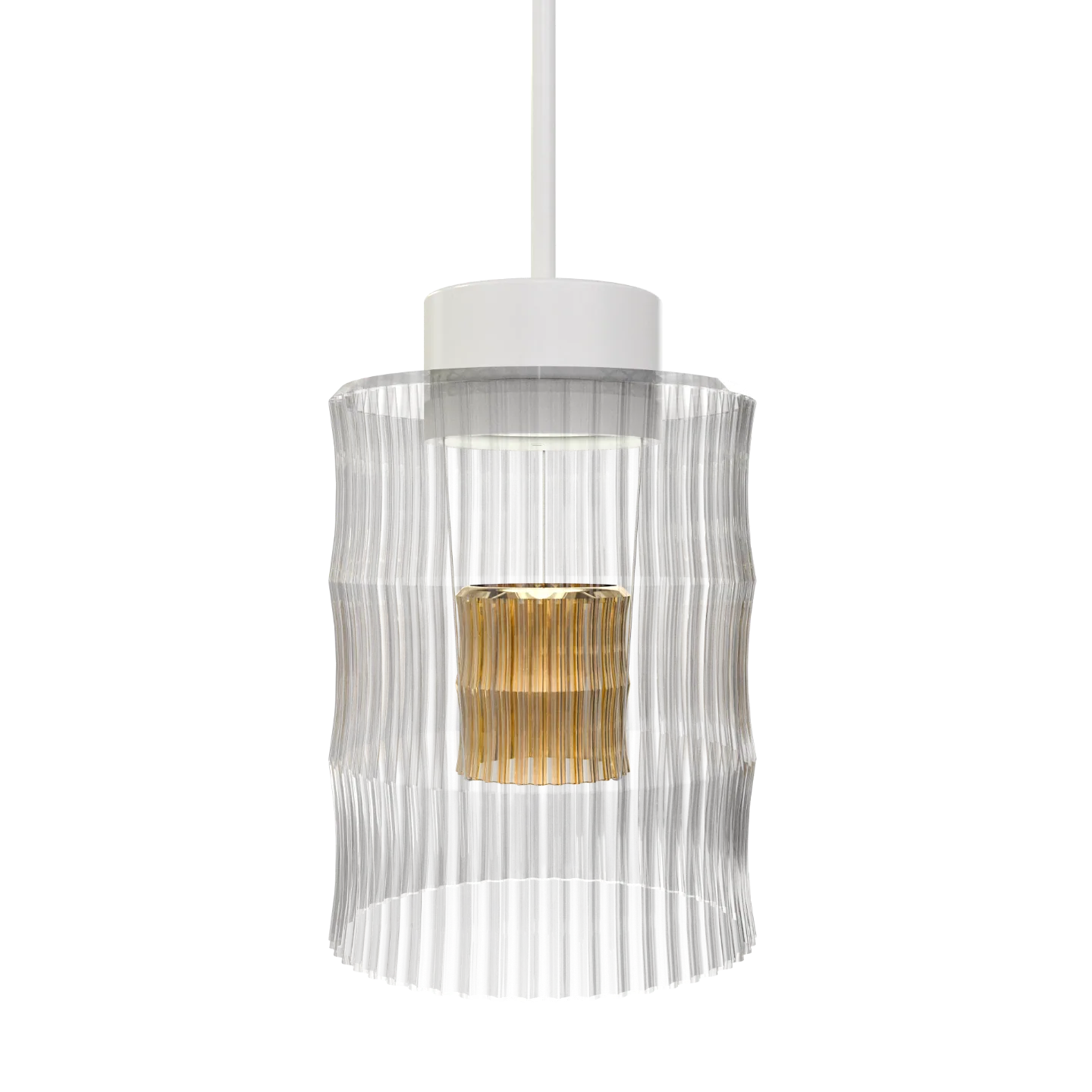
Celina comes in silver or white, and the small inner vase sets the colour.

Prototype
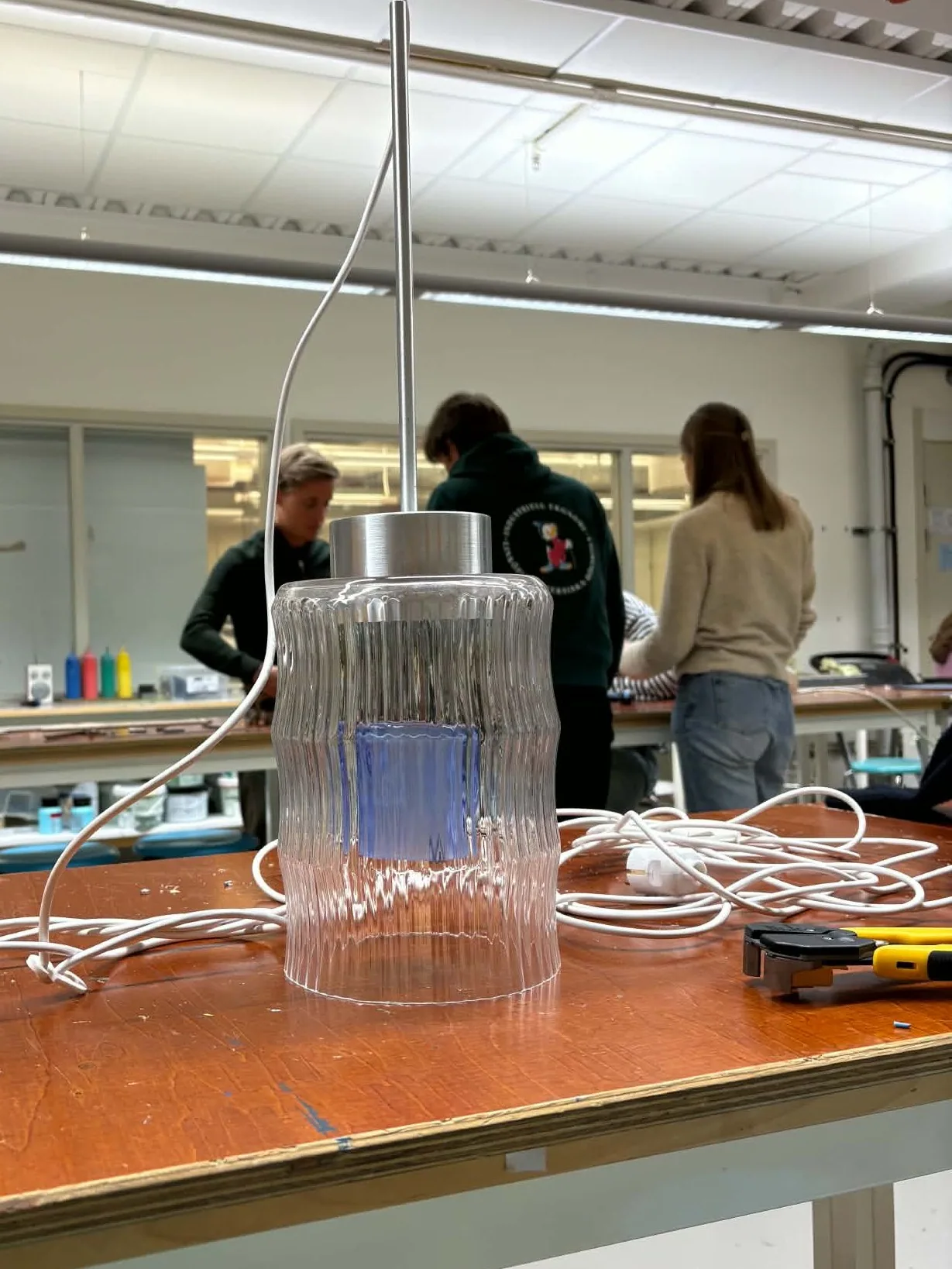
We modelled every part in Fusion 360 and had them CNC-turned in aluminium. The large vase is clamped between the top cap and the lock ring, and a fabric diffuser in the lock ring softens the light.



Outcome
The three lamps were shown at an exhibition at Linköping University, each staged in the setting it was designed for, alongside Reijmyre's vases and our process posters.


Looking back
Working with glass and light was harder than it looked. Ribbed, hand-blown glass spreads light in ways that are hard to predict, and clear glass hides nothing, so every choice of light source, diffuser and distance had to be tested in the light lab rather than decided on screen.
The glass itself was the other challenge. The construction had to work with vases that are never quite the same twice, which meant designing for variation instead of exact measurements.