
SVÄNGA FÖRBI
- Role
- Sketches, CAD and renderings
- Team
- Group of five
- Year
- Autumn 2025
- Tools
- Fusion 360, Blender, Photoshop
- Type
- Course project · Material for Design (TMKM11), Linköping University
A hanging sofa swing in aluminium, cross-laminated timber and steel wire, made for the course Material for Design at Linköping University.
The process
- 01UnderstandInconcrete brutalism: a product in at least two materials, made for people in Vadstena.The brief
- 02IdeateWays of hanging a seat, on paper and in quick AI images.Sketches
- 03DevelopA structure with nothing hidden, and how aluminium, timber and steel wire meet.Nothing hidden · Three materials
- 04BuildA scale model of the whole swing, with 3D printed legs.The model
- 05DeliverThe swing placed on a wooden deck at dusk.In place
- 06ReflectWhat testing the strength would have taught us.Looking back
The brief
Brutalism takes its name from béton brut, raw concrete. The architecture historian Reyner Banham described it by three traits: a memorable image, a structure shown clearly, and materials valued as they are found.
The brief took the concrete away: inconcrete brutalism. The task was a product in at least two materials from different material classes, with the focus on how they meet, made for people in Vadstena to buy and use.

Sketches
I started on paper, trying different ways of hanging a seat: from a single curved post, in a frame, as a hammock between two posts, and as a sofa hanging from a beam.


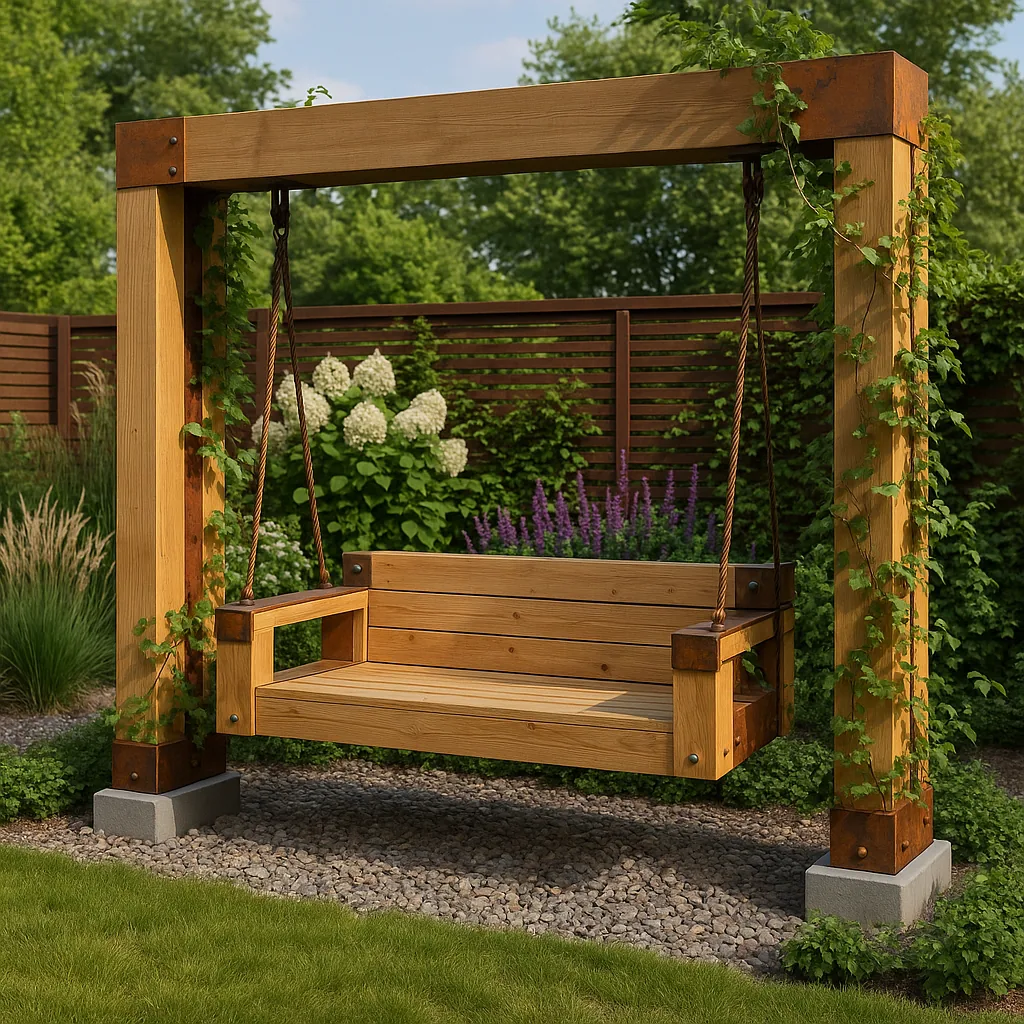
Quick AI-generated images were used alongside the sketches to test directions: a fabric hammock, a slatted seat and a heavy timber frame with a hanging bench.


Nothing hidden
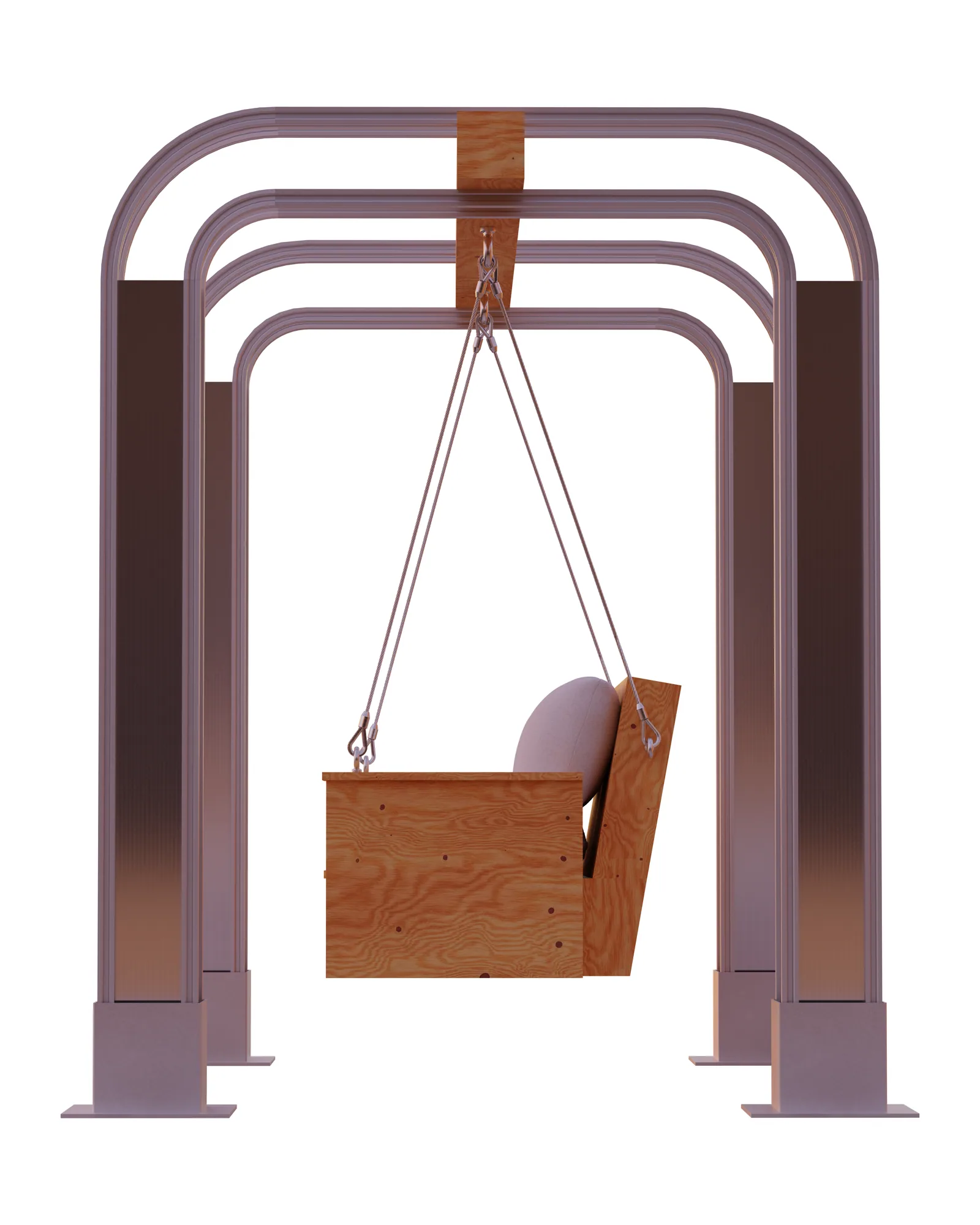
The brutalism is in the structure. Nothing is covered up: the frame, the beam and the wires that carry the sofa are all in plain view, and the scale is big and heavy on purpose.
The frame is made of aluminium profiles bent into arches. Raw, industrial parts used as they are, the way the buildings the brief started from used concrete.

Three materials
How the materials meet was the core of the course. The sofa is a box of cross-laminated timber that hangs in steel wires, fixed with eye bolts and wire locks so every connection can be seen.


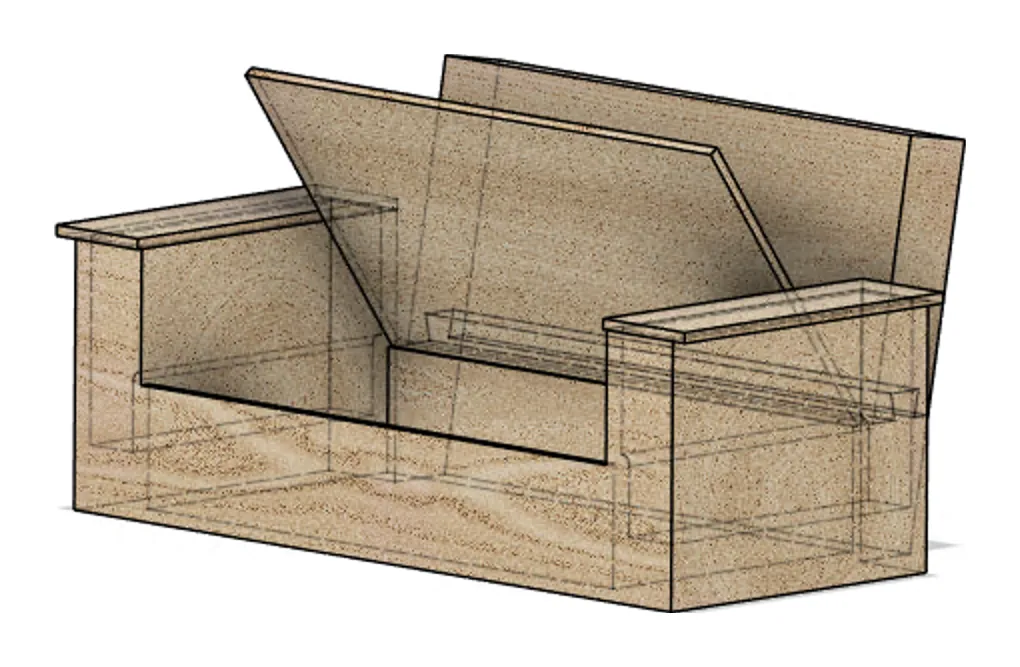

Joint studies on paper.
The model
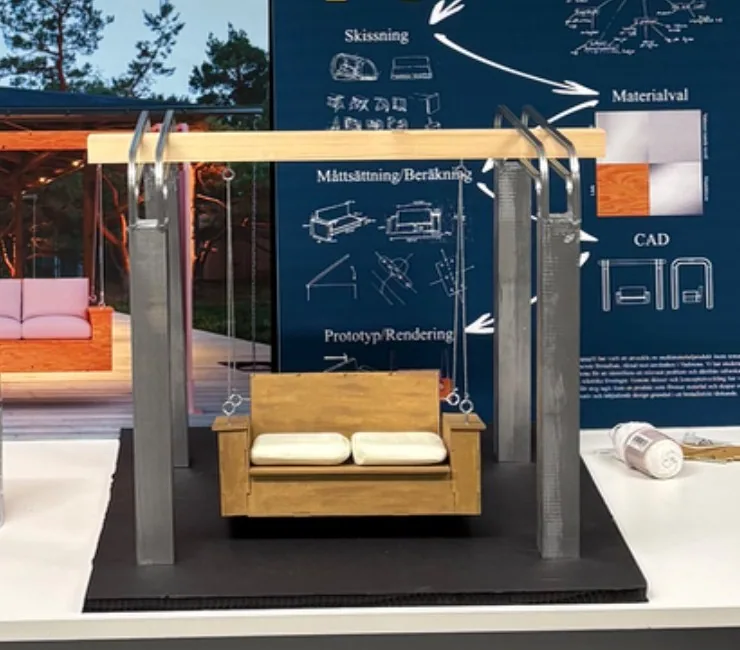
The brief asked for a model of the most interesting parts of the product. We built the whole swing in scale and showed it in front of the two project posters.
The aluminium profiles of the legs are 3D printed, and the sofa is made of spray-painted MDF.

In place
Finally the swing was placed in a setting: a wooden deck in front of a house at dusk.


Looking back
We never had time to test the strength and construction honestly, neither through simulations nor in real life. Doing so would have given the swing more realism and a better feel for it as an object: how it carries weight, and how it moves when you swing.